Use Ocean Plastics to Make Bags Products for Eco-minded Consumers
What Is Ocean Plastic?
Plastic is everywhere: The billions upon billions of items of plastic waste choking our lakes, and rivers and our oceans and piling up on land is harmful to plants and wildlife. Among the top 10 kinds of trash picked up during the 2022 International Coastal Cleanup were food wrappers, beverage bottles, cigarette butts, grocery bags, bottle caps, straws, and take out containers, all made of plastic.
These plastics come in many different forms. Just think about all the plastic items you use daily: the toothbrush you grab first thing in the morning, the container your lunch comes in, or the bottle you drink water from after your workout.
All these things get used and, eventually, thrown out. Many plastic products are single-use items that are designed to be thrown out, like water bottles or take out containers. These are used and discarded quickly. If this waste isn’t properly disposed of or managed, it can end up in the ocean.
Unlike some other kinds of waste, plastic doesn’t decompose. That means plastic can stick around indefinitely, wreaking havoc on marine ecosystems. Some plastics float once they enter the ocean, though not all do. As the plastic is tossed around, much of it breaks into tiny pieces, called microplastics.
Every minute, two garbage trucks of plastic are dumped into our oceans. Currently, scientists think about 8 million metric tons of plastic entered the ocean in 2010. That’s enough trash to cover every foot of coastline around the world with five full trash bags of plastic…compounding every year.
The amount of plastic trash that flows into the oceans every year is expected to nearly triple by 2040 to 29 million metric tons and the problem continues to grow.
Ocean plastics are a major concern for environmentalists around the world. But how did this garbage get so out of control, and what can we do about it? We explain the pollution history, growth, and solutions in this comprehensive guide below:
Where does ocean plastic come from?
According to the National Ocean Service, The billions upon billions of items of plastic waste choking our lakes, and rivers and our oceans and piling up on land is harmful to plants and wildlife. the vast majority of ocean pollution — a whopping 80 percent — comes from the land. It’s often caused by something called nonpoint source pollution, which occurs when the rain or melting snow picks up garbage on the ground, carrying the runoff into waterways.
When did ocean plastic pollution start?
The ocean plastics problem didn’t begin until plastics went mainstream — and before they could do that, they had to be invented.
In 1869, John Wesley Hyatt created the first synthetic plastic by combining a cellulose derived from cotton with the waxy solid camphor to form celluloid. Hyatt was simply trying to collect the $10,000 reward a billiards company was offering to anyone who developed a good alternative to ivory, the default material used in pool balls at the time. But his breakthrough paved the way for Leo Baekeland to discover the first totally synthetic plastic — one containing no materials found in nature — in 1907.
After that, innovators debuted a steady stream of synthetic plastics. By the 1930s and 1940s, widely consumed types like polystyrene, polythene, nylon, and polyester were in circulation. World War II would only cement these plastics’ popularity, as the cheap materials were quickly utilized to build military vehicles and radar pieces.
The boom in plastic production hit 1.5 million metric tons by 1950, and it was roughly a decade later that the scientific community realized this material was polluting the oceans. According to the Smithsonian, marine scientists noted the problem in the 1960s, when they discovered plastic pieces in the stomachs of dead seabirds. They turned up similar results in plankton, whales, and dolphins — setting the stage for our current climate, when millions of animals are threatened by ocean pollution.
What are some ocean pollution facts?
It’s hard to appreciate the scope of the problem without concrete stats — and the ones available are pretty alarming. Here’s what scientists around the globe know about the plastic that goes into our oceans:
- Since the 1950s, humans have generated about 8.3 billion metric tons of plastic. The substance has now outpaced all man-made materials besides steel and cement, and most of it turns into trash. This stat comes from a widely cited 2017 scientific study, which also found that….
- About half of the plastic produced was made in the past 13 years.
- By 2015, 6.3 billion metric tons of plastic had already become waste, and only 9 percent of it was recycled. Another 12 percent was incinerated, while 79 percent ended up in landfills or the natural environment. If current conditions continue, the amount of waste will jump dramatically.
- By 2050, around 12 billion metric tons of plastic could wind up in landfills or the natural world.
- Each year, at least 8 million metric tons of plastic enter the ocean, which is the same as dumping a full garbage truck into the water every minute.
- The United Nations Environment Programme estimates that every square mile of ocean contains roughly 46,000 pieces of floating plastic.
- The world’s largest collection of floating trash is the Great Pacific Garbage Patch, a collection of debris that lies between California and Hawaii. It contains roughly 79,000 metric tons of plastic.
- Up to 85 percent of plastic pollution found on shorelines is microplastics. These tiny fragmented pieces of plastic break off when the material is left to degrade under the sun’s UV rays, and they are often consumed by animals that live near or in the ocean.
- According to UNESCO, plastic waste accounts for the deaths of more than a million seabirds every year, along with over 100,000 marine mammals.
- By 2050, there could be more plastic in the ocean than fish.
What can ocean plastics be used for?
Some of the plastic litter removed from our oceans today is being used to make valuable new products. So, similar to recycling our plastic milk jugs, yogurt containers, and grocery bags, these littered plastics can get a second chance, reducing environmental impact and helping save resources. Ocean plastics can be recycled to make everything from clothing, bag, furniture, sunglasses, etc.—they’re a resource that’s just too valuable to waste.
Products Made Using Plastics Recovered From The Ocean
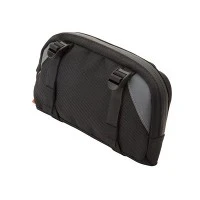
Green Field has developed bags made with recovered ocean plastics, particularly high-density polyethylene (HDPE) used to make plastic milk jugs, laundry detergent bottles, and shopping bags, etc.
A cosmetics company has partnered up with Ocean Legacy, an organization that collects plastic litter from the Pacific Ocean, to make bottles and pots for its products. The company even rewards its customers for recycling—when they return five clean and empty pots to a store, they get a free face mask.
A popular trend-setting apparel company released a line of clothing “made in sustainable materials that you want to wear for seasons to come,” including plastics recovered from oceans, according to the company. Featuring special pieces such as elegant evening gowns, the collection demonstrates that sustainability is always in style for any occasion.
How to keep plastic out of the world's ocean?
There are many ways to keep plastic out of the ocean! Here are two strategies:
1. Reduce plastic use.
Think about all the plastic items you use every day. Can you count them all? Look around you. How many plastic things can you see? Being more aware of how and why you use the plastics that you do is the first step to reducing plastic use. Commit to changing your habits by reducing your use of disposable and single-use plastic items, reusing items and/or recycling them.
2. Participate in a cleanup.
Volunteer to pick up marine litter in your local community. Find a cleanup near you!
NOAA’s Marine Debris Program (MDP) works to understand how plastics — and other marine debris — get into our ocean, how they can be removed, and how they can be kept from polluting our marine environment in the future.
3. Use biodegradable materials that can be used to replace plastic:
Green Field can produce the bags with biodegradable materials that can break down easily in the environment. This means that they won’t harm the planet or its inhabitants when they’re disposed of. In contrast, traditional plastic packaging is not biodegradable and can take centuries to decompose.
When deciding which eco-friendly material is best for bags, there are many factors to consider. These include environmental impact, cost efficiency, material safety, recyclability, and more. That being said, here are some of the top options you have for the bags.
#1 – Cotton fabric
Cotton is always such a versatile material and can be used for so many different projects - including bags! One of the delightful aspects of this fabric is that it is available in so many different prints and colours, so you can really create a bag design which truly reflects your personality. 100% cotton is also a very durable fabric, which if you look out for the OEKO-TEX label is sustainable and good for the environment, as well as machine washable. People often make tote bags with cotton panama fabric, which is heavier weight than a standard cotton as they are perfect for everyday shopping purposes and can easily be folded away when not in use.
#2 – Washable Kraft Paper
Washable kraft paper, or kraft paper fabric, or Kraft-Tex, leather paper has become a favorite leather and fabric alternative in design products like bags and wallets and among eco-conscious crafters. Since it’s lightweight, washable, cruelty-free and biodegradable, there’s no wonder that shoppers and makers driven by cause (and style!) love products made with kraft paper fabric.
Washable kraft paper is made from coniferous wood from FSC certified cultivation and is certified according to STANDARD 100 by OEKO-TEX®. Compared to conventional materials such as leather, there is no need to resort to animal resources. Which means less CO2 emission.
#3 – Hemp
Hemp is another material that’s eco-friendly and easy on the planet. It’s made from industrial hemp plants grown for this purpose only, which means that it doesn’t have a detrimental effect on the earth’s other inhabitants. Hemp is also a sustainable material that can be reused many times over with no quality loss. It won’t release toxic chemicals when thrown away or burned (which makes it great for compostable packaging materials).
#4 – Tyvek
DuPont™ Tyvek® is a unique nonwoven material only from DuPont. Tyvek® is a 100% synthetic material made from high-density spunbound polyethylene fibers 100% High Density Polyethylene (HPDE). Lightweight, durable and breathable, yet resistant to water, abrasion, bacterial penetration and aging, Tyvek® is an amazing material used to improve a variety of applications across multiple industries.
#5 – Recycled Polyester (RPET)
Single-use plastics are wreaking havoc on our environment, and many brands have worked out ways to give landfill-bound plastic bags, bottles, and textiles a second life.
Recycled polyester is made from the #1 type of plastic (hence the name rPET), often recycled plastic bottles.
Like virgin polyester (and most synthetic fabrics), rPET is versatile and can take the form of many different feels and functions—from thin and light stretchy sustainable activewear to thick and fluffy fleece.
It’s been the go-to sustainable activewear fabric for brands like Patagonia and Reformation for years.
However, aside from also releasing microplastics, PET can only be recycled so much before it degrades in quality to the point of needing to be discarded.
There are also concerns about some of the toxic substances in PET bottles and the effects upon the wearer (like BPA in sports bras), so non-toxic certifications are important here.
Certifications: Global Recycle Standard (GRS), Recycled Content Standard (RCS), OEKO-TEX, bluesign®
#6 – Cork
Cork fabric has left the board and the bottle to make it onto our bodies.
Cork is sustainably harvested from a cork oak (yes, it’s from a tree) by simply shaving away the bark. In fact, Quercus suber can (and should) be harvested to extend its life.
While the tree is regrowing the bark, it consumes more carbon dioxide than most types of trees, meaning cork plantations act as a carbon sink.
Not only that, but cork is a valuable member of a unique ecosystem, supporting a range of plant and animal species.
Once harvested from a mature tree every 9 to 12 years, the cork can be laid out in the sun to dry, and then just requires water to transform it into something suitable for fashion.
As one of the most sustainable vegan leather alternatives, it’s become a popular choice for vegan bags.
Certifications: Forest Stewardship Council (FSC)
You might not realize it, but cork is one of the most common (and biodegradable) packaging materials available! It’s used in things like bottle stoppers, wine corks, insulation, bulletin boards, flooring, and more. Cork trees are harvested for this purpose only; they can be regrown quickly after being stripped of their bark without suffering ill effects. Plus, cork is entirely biodegradable and can be composted or burned for fuel without releasing toxic fumes.